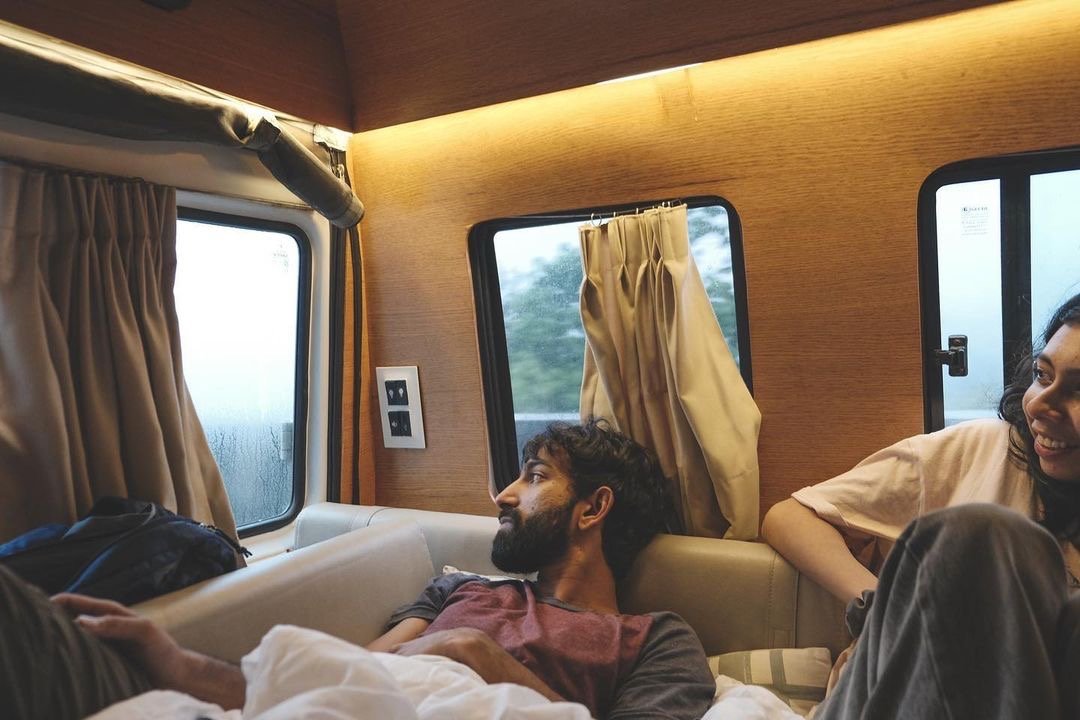
There’s a particular quiet that settles in a few hours into a drive — when the highway noise falls into rhythm and the four walls around you stop feeling like a vehicle and start feeling like home. That’s the quiet we design for.
Caravan tourism in India is often described in terms of freedom and flexibility. We’d add another word: intention. At Vahn, a home on wheels isn’t a rental product — it’s a considered response to how people actually want to move through this country: unhurried, curious, unwilling to trade its textures for a fixed itinerary.
Caravan Tourism, Reframed
For us, caravan tourism isn’t a category of holiday — it’s a design constraint. When your kitchen and bedroom move with you, every decision about how you travel becomes a decision about how you live. A van doesn’t ask you to choose between the destination and the journey; it removes the choice.
That’s what we build toward: not efficiency, but presence. Not itinerary, but instinct.
Craft Before Comfort
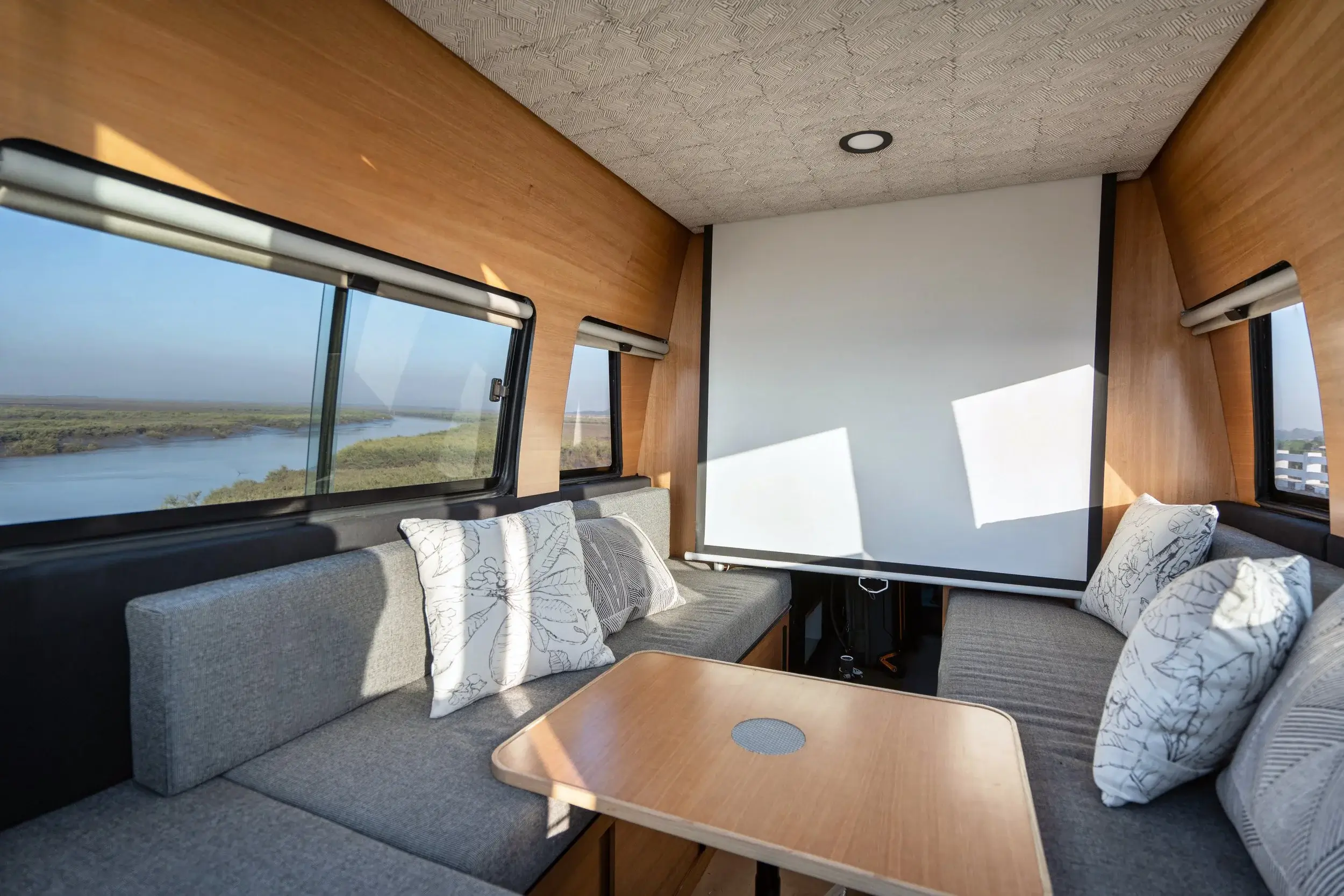
Every van begins as a question, not a checklist: how does this person want to wake up? What does rest look like after a long day on unfamiliar roads? Comfort isn’t bolted on afterward — it’s the starting brief.
That means honest materials over decorative ones, layouts that respond to how a body moves through a small space, and finishes that age well rather than simply looking new. A van is lived in more intimately than any house, and deserves the same rigor.
The Many Faces of Caravan Travel in India
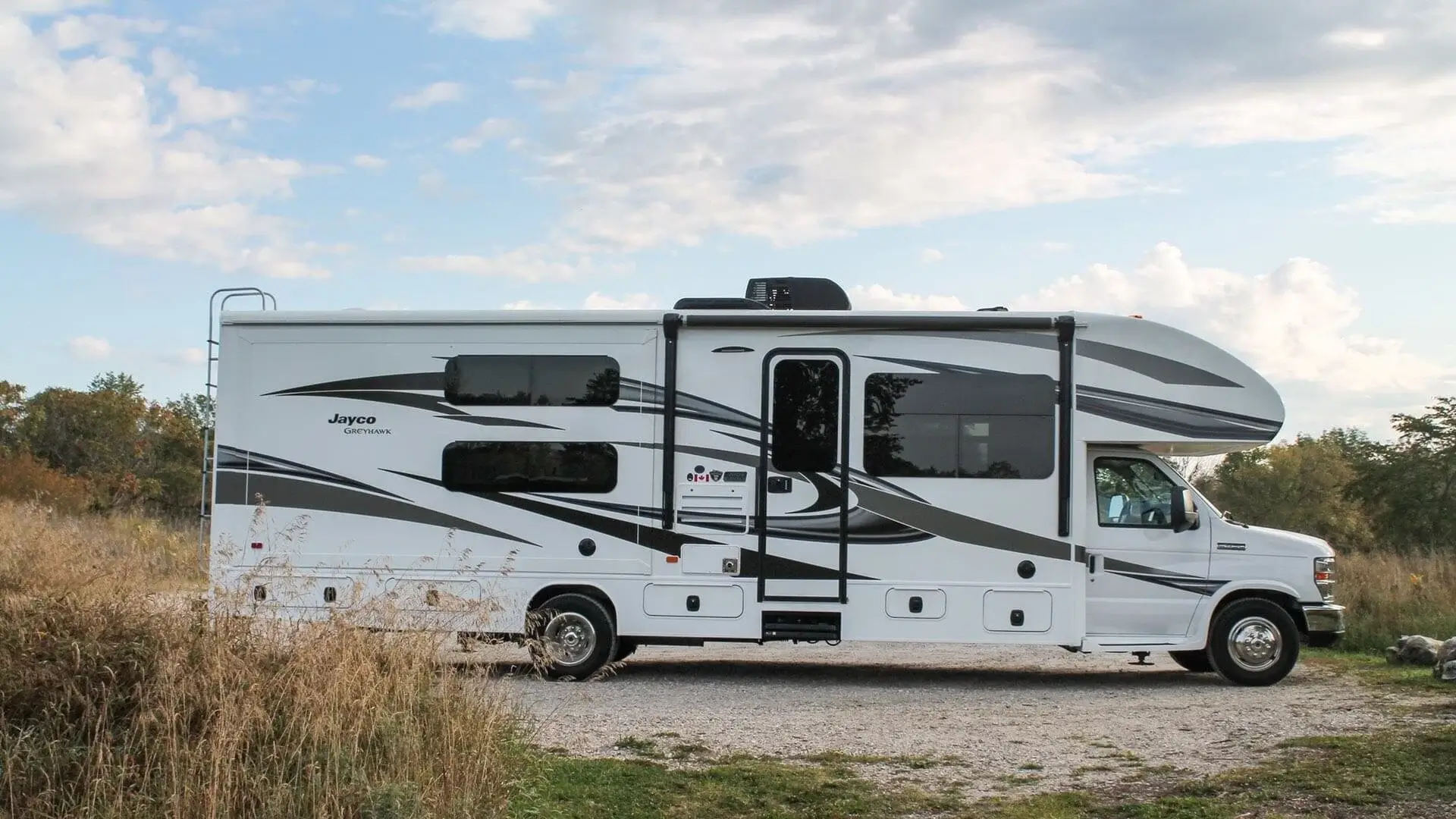
Motorhomes, campervans, trailers — these are less categories of vehicle than temperaments. A motorhome carries the unhurried confidence of a full home.
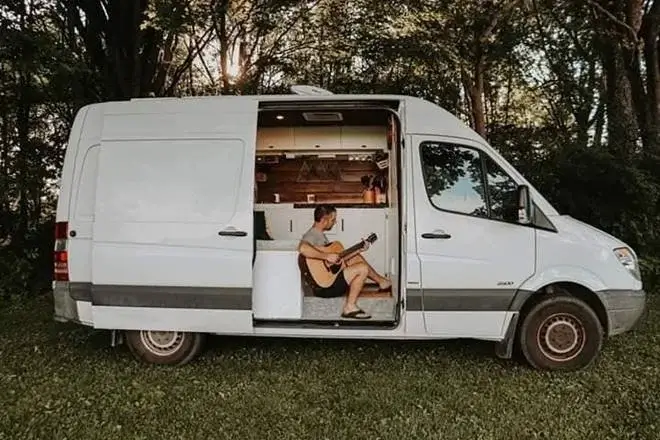
A campervan is nimbler, built for spontaneity.
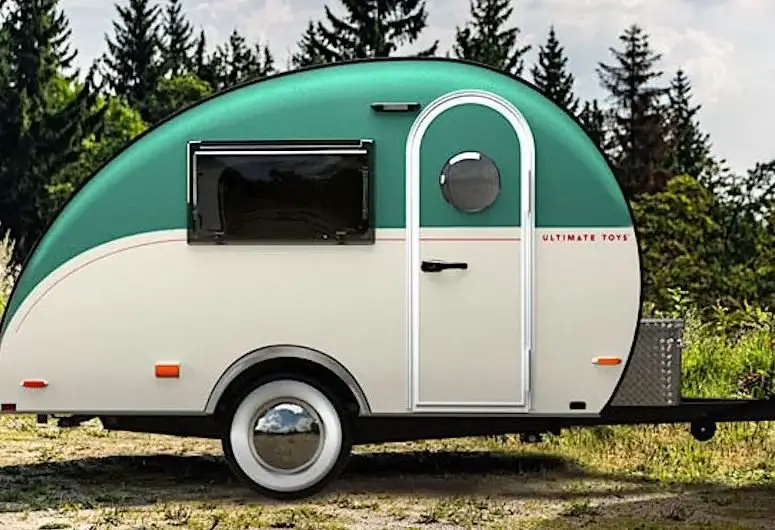
A trailer lets you set down roots for a few days, then wander on, unencumbered.
We don’t start with size or budget. We start with what kind of traveller someone is, and let the van take its shape from there.
Details as Decisions
A kitchenette says something about how someone wants to cook, and for whom. A sleeping berth is a study in how several people share a small volume of space without losing their sense of self. Lighting, storage, even the hush between the cab and the living quarters — each is a small decision that adds up to a philosophy of dwelling, not a features list.
Where Caravan Tourism in India Comes to Life
Certain landscapes ask more of a van than others — and teach us more in return. A few that continue to shape how we build:
- Rann of Kutch — endless white salt flats and a silence that tests how well a van holds heat, light, and stillness.
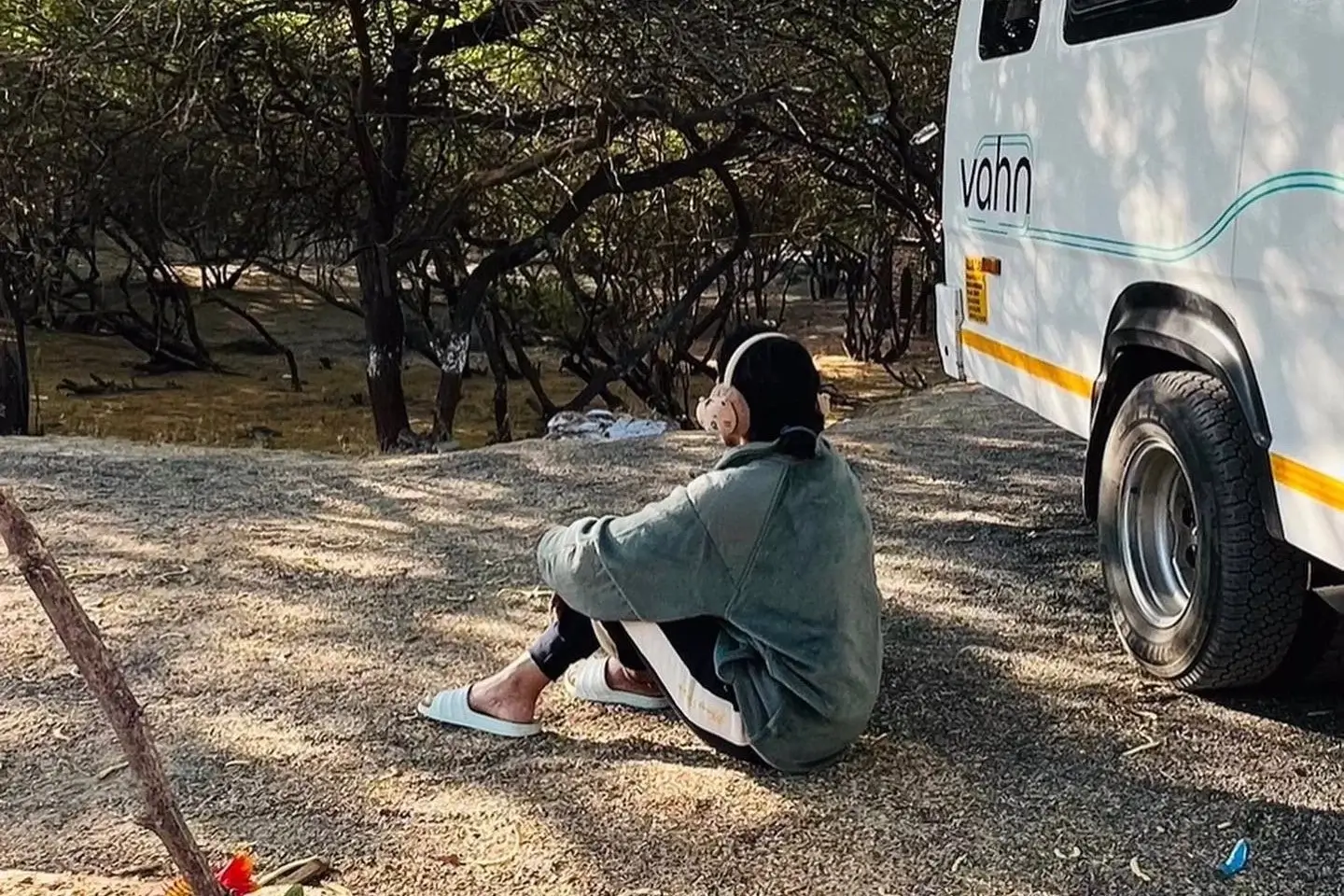
- Gir Forest — dry gold scrubland where a van needs to sit quietly at the edge of the wild without disturbing it.
- Kumbhalgarh — fortress silhouettes at dusk, and roads that reward a van built for slow, deliberate arrival.
- Saputara — hill air and switchback roads, where insulation and handling matter as much as the view.
These aren’t destinations to check off a list. They’re collaborators that have quietly shaped our design decisions over the years.
Building Lightly
Slow travel, done honestly, is a practice in restraint. Cooking your own food, managing your own water, carrying less than you think you need — this isn’t sacrifice, it’s a return to a self-sufficiency most modern travel has designed out of us. A well-built van uses less and asks less of the places it passes through. That’s not a feature. It’s a responsibility.
The Road Ahead for Caravan Tourism in India
Caravan tourism in India is still young — infrastructure is patchy, dedicated parking rare, and the idea of a home on wheels is only beginning to enter the popular imagination. We find that exciting rather than discouraging. The culture is still being written, one journey and one considered build at a time.
We think it becomes something quieter than tourism, and closer to a philosophy — a gentle argument for a slower relationship with distance, landscape, and time.
If that way of thinking about the road resonates with you, we’d love to design one with you.